Ten Favorite Epics
With the release of Christopher Nolan’s The Odyssey, I decided to take a look at one of my favorite film subgenres: the epic. Homer’s poem “The Odyssey” is a literal epic poem. So, it would’ve been weird if Nolan’s adaptation was a 90-minute blurb.
Instead, it’s a sprawling Epic. Delivers on almost every level. And proves why I’m such a sucker for the “Epic” film. In short, I’m always in awe when a filmmaker can pull off a massive achievement like the Epic: massive scale, lots of extras, big run-times.
So, here are ten of my favorite epics (In Chronological order by release)
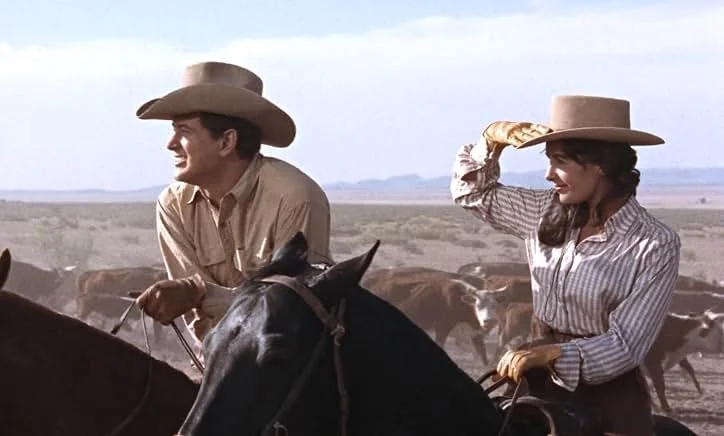
Giant (1956) – George Stevens
The quintessential American epic. I know many might say The Godfather Part II, which is hard to argue against. But Giant tracks the economic history of Texas as a microcosm of the United States as it relates to race, sex, and economy.
Maybe the best part, and what keeps it so fresh, is its take on feminism as well as racism. Shown through small moments rather than large monologues or overly dramatic scenes. Rock Hudson doesn’t fully change at the end, but he’s growing.
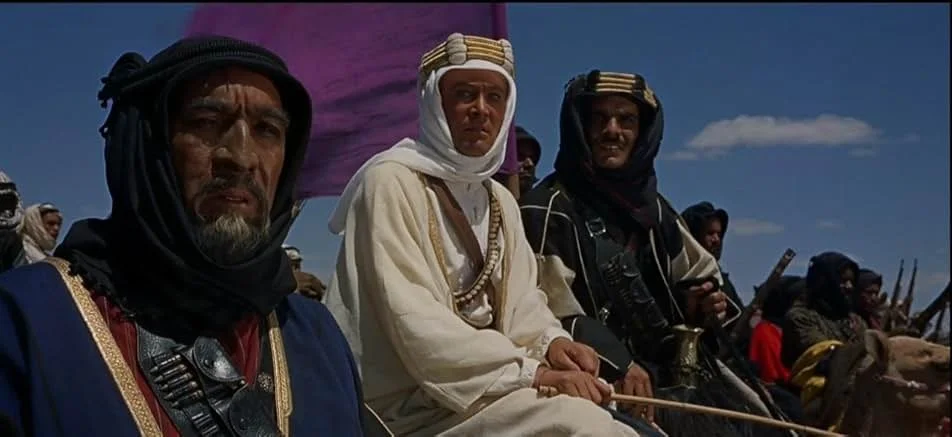
Lawrence of Arabia (1962) – David Lean
The epics of all epics. The one to which every subsequent epic is compared. Without this film, there is no Indiana Jones, no Brendan Fraser’s The Mummy. Even the vision of Villeneuve’s Dune. The vast expanse of Arrakis could easily have Lawrence traversing it on his camel all in white.
One of the genius strokes of Nolan in his adaptation of The Odyssey is framing the story through Odysseus’s guilt over the Trojan Horse. Legend says he’s a hero, but he has guilt over defying Zeus’ law and feels like he was a harbinger of deception upon Ancient Greece. The beginning of the end of their society.
Just like T. E. Lawrence felt major guilt at the end of Lawrence of Arabia, his own people believe he did something great, but Lawrence never felt like a hero. Just one of the many reasons I still consider this the greatest film ever made.
What Lean accomplishes is a miracle. In every frame, I can’t figure out how he did it. I felt watching The Odyssey that Nolan was striving to achieve something close. He doesn’t, but I will say The Odyssey must be seen on a massive screen, like Lawrence of Arabia, so in a way he achieved something.
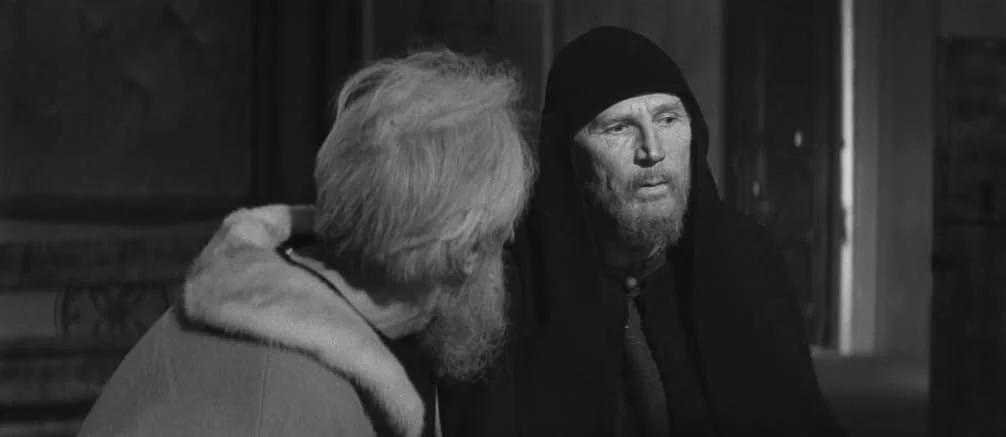
Andrei Rublev (1966) – Andrei Tarkovsky
A historical biopic focusing on the religious iconographer Andrei Rublev. Drifting through a tumultuous time in Russia, the monk becomes revered for his artwork. Told through a series of vignettes of his life, these moments serve as some of the most important moments in his life.
It’s a breathtaking achievement of filmmaking. If I made something a tenth as good, I’d consider myself accomplished. It’s stunning in black and white, a genius choice by Tarkovsky.
What makes this film so special is one of the downsides of Nolan’s Odyssey. The episodic nature, getting moments of Andrei’s life. In The Odyssey, we hit a time in the film that becomes a checklist of Odysseus’s journey. It feels a bit rushed, like Nolan knew the beats he had to hit before we get back to Ithaca. Yet, several sequences are still spectacular.
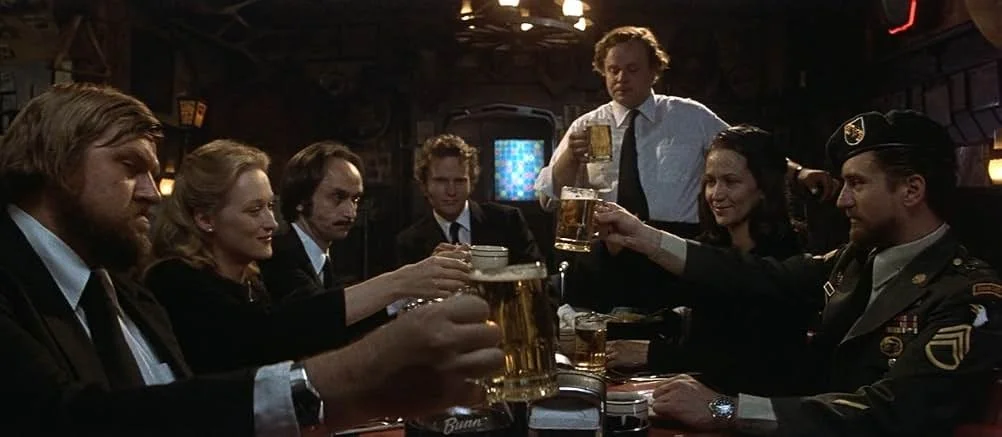
The Deer Hunter (1978) – Michael Cimino
I’d argue this is the greatest Vietnam War film. Is it the most “accurate”? No. Is it a tremendous film about how war not only affects the people who go and fight, but the families back home. A piercing look into masculinity.
Like The Odyssey, it’s a historical epic but not exactly historically accurate. Now, of course, there is no historical accuracy to Homer’s epic poem, unless you’re Fox News, who is mad at the “historical inaccuracy” casting of the film…
Anywho, The Deer Hunter is a profound film that I find more moving with every watch.
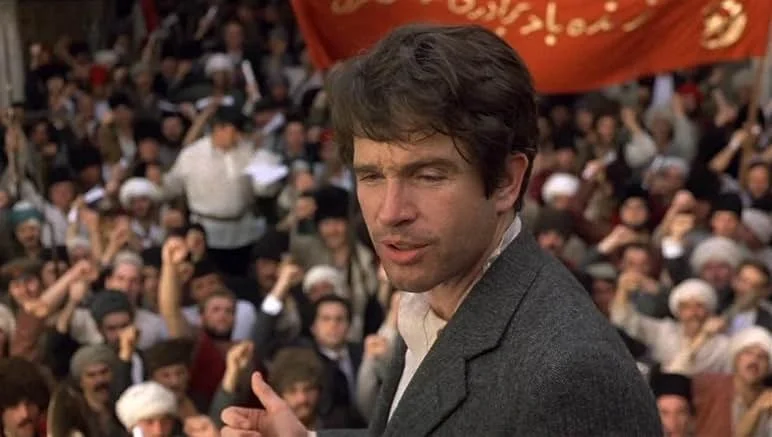
Reds (1981) – Warren Beatty
Unlike The Deer Hunter, Reds is a historic epic, biopic of John Reed. A journalist who goes to Russia and covers the Russian Revolution and wrote the novel “Ten Days That Shook the World.”
One of the most interesting moments in world history through the eyes of an American journalist who becomes a revolutionary. At his best, Warren Beatty made or helped make some of the greatest and most important American films.
Watching this film, you can feel the labor in every frame. The number of extras is second only to Lawrence of Arabia, on this list at least. Moments of grandeur, mixed with quiet moments of character building. Truly one of the American Masterpieces.
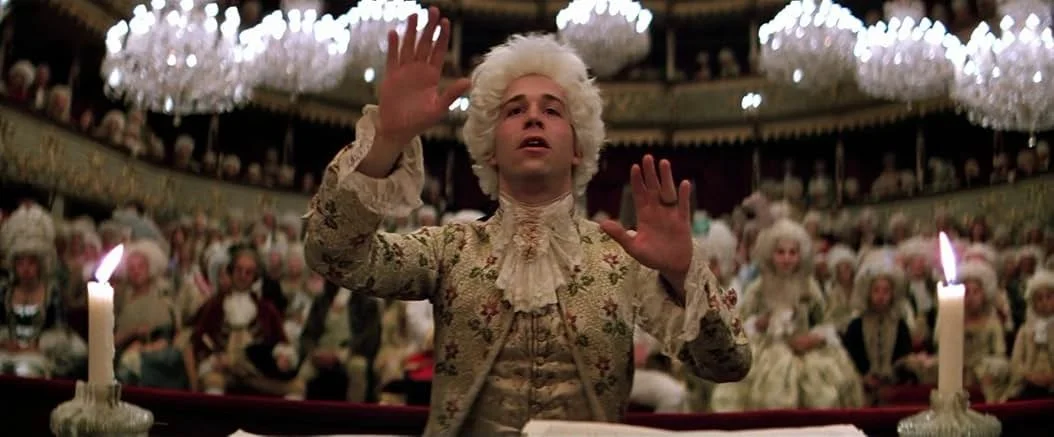
Amadeus (1984) – Milos Forman
The theatrical film is about 160 minutes. But I’ve only seen the director’s cut, which lands around 180-minutes. Salieri sets out to ruin Mozart after becoming jealous that God would put immense talent in a buffoon, at least in Salieri’s eyes.
Maybe not epic in scope, but the figure of Mozart makes this feel epic; its sets, costume design, and Mozart’s incredible music bring about a grand atmosphere. Using the framework of a story being told by an old man gives this a similar vibe to The Odyssey; as I write this, I see the similarities here. Stories about great humans being passed down through music.
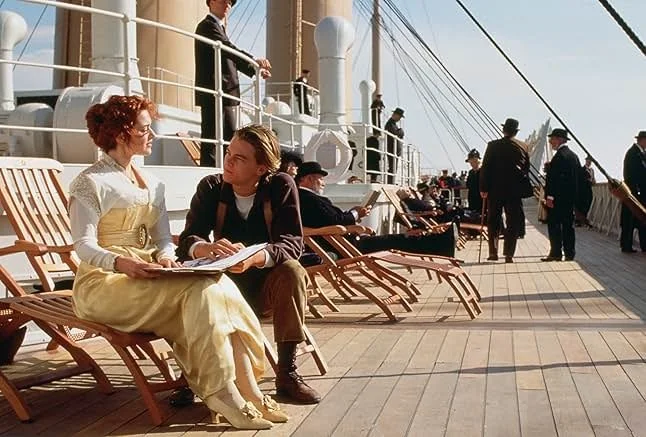
Titanic (1997) – James Cameron
The ultimate romantic epic! Although, given time, maybe Rose isn’t the “best” protagonist. But every time I sit down to watch this film, I forget all of that nonsense, that annoying chatter. Because this truly sweeps you off your feet. Every damn time.
As a fellow wife guy, I love Nolan’s take on The Odyssey. Not just a journey home but back to his true love. A life without my wife is no life; it’s something that Nolan clearly feels as well. It’s nice that he finally made a movie where the wife is not dead.
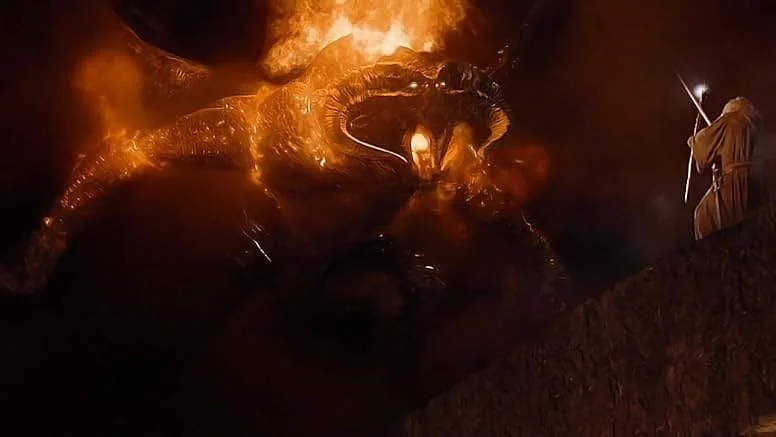
Lord of the Rings: The Fellowship of the Ring (2001) – Peter Jackson
Rather than a journey home, what about a journey to save the earth? Middle-earth, to be exact. You could pick any of the Lord of the Rings films to be on this list. However, my personal favorite will always be the first film.
It has the most of Middle-earth, more of The Shire; if I want a Lord of the Rings fix, this is the one in the trilogy I turn to. You could pick from the theatrical or the extended edition; it doesn’t matter, but as a fan I prefer the extended.
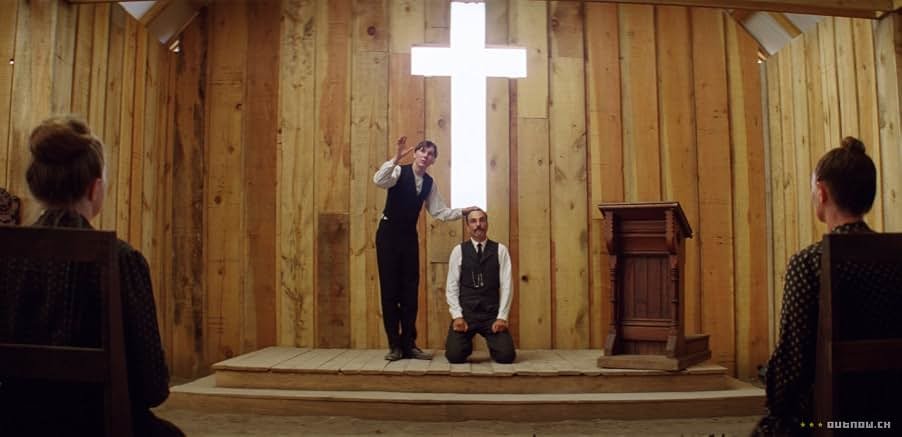
There Will Be Blood (2007) – Paul Thomas Anderson
Easily the shortest film on this list. From a runtime standpoint, maybe this is not an Epic. But the scope of the story and the vastness of the sets, I think this fits. Much like Giant, this tells a story on a microcosm level about America and its battle between religion and capitalism battling for control of the country.
Not really a way to tie this to The Odyssey, considering Daniel is evil and not a flawed hero like Odysseus. But pure evil. Maybe you could say Daniel represents the corporate greed monster corrupting America as the Trojan Horse corrupted Ancient Greece? But that might be a stretch.
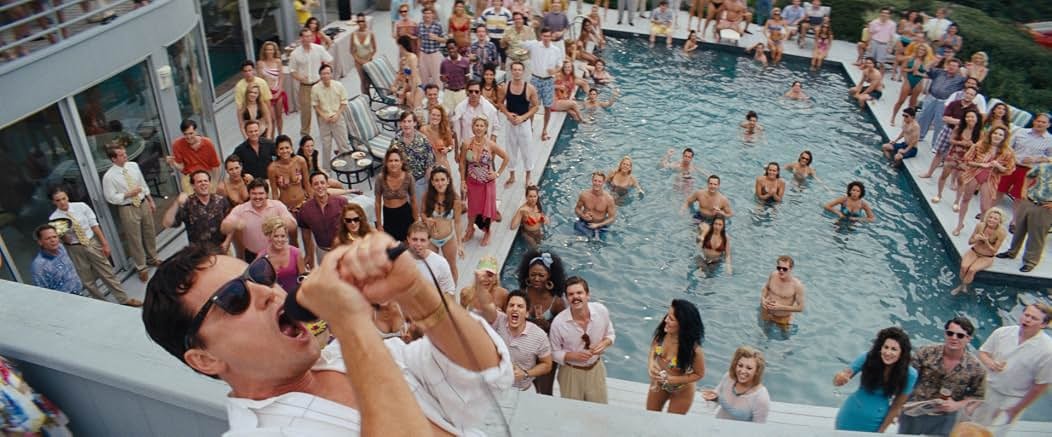
The Wolf of Wall Street (2013) – Martin Scorsese
In this final spot, it was a battle between this Scorsese masterpiece or Chazelle’s masterpiece Babylon. Both run over three hours and are all about excess. Both in times of opulence in America. Both made to lure you in without you realizing the evils that await.
It’s one of Marty’s best films, from the central Leo performance to all the supporting characters. The massive amounts of extras and the run-time that goes by in the blink of an eye. Either this film or Babylon could represent the parties on Ithaca of all the suitors attempting to win the heart of Penelope, all with ulterior motives.
